

A child’s learning map rarely looks like a straight line. It begins with a question that pops up during breakfast, continues with an experiment in the bathtub, and circles back later as a story told to a friend. When adults treat these moments as meaningful, children start to see their own minds as tools for exploring the world. The result is a form of learning that feels alive, because it grows from wonder instead of pressure.
The First Curiosity Pin
Early questions are like pins dropped onto an empty map: “Why does the shadow move?” “How do seeds know what to do?” “Who decided the names of the planets?” The atmosphere of the learning culture is more important than flashy promises when parents are weighing their alternatives and touring classrooms throughout the city, particularly when thinking about private elementary school in Bangalore that claims to nurture independent thinkers. A child who feels taken seriously begins to ask better questions, and those questions become the real starting point for progress.
Tiny Clues, Big Trails
A child collects clues all day, often without realizing it. The sound of different footsteps on a hallway floor, the way a spoon sinks in thick soup but floats in bubbly water, the pattern of windows on neighboring buildings, each detail can turn into a trail worth following. When adults respond with “What do you think is happening?” Instead of quick explanations, children learn to connect observations to ideas. Over time, they build a habit of linking the small to the significant, which is how discovery tends to work in real life.
The Home Base of Safety
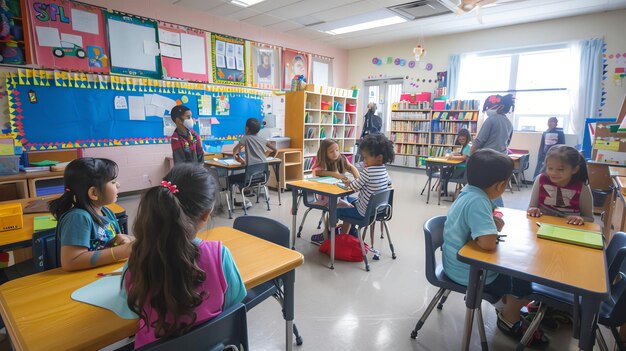
Curiosity grows best when a child feels emotionally safe. A steady routine, predictable boundaries, and warm relationships create a home base from which children can venture outward into challenge. In that kind of environment, a mistake isn’t a verdict; it’s a signal to try again with a new approach. When children sense that their worth is not tied to perfection, they become more willing to explore unfamiliar problems and to stay with them long enough to learn something real.
Tools That Make Thinking Visible
Children understand more when ideas can be touched, moved, sorted, and rebuilt. Objects for measuring, blocks for modeling, picture cards for sequencing, simple charts for tracking results—these tools externalize thought so a child can examine it. The most powerful tools don’t hand over answers; they help children notice patterns, test possibilities, and revise conclusions. When thinking becomes visible, children can explain what they did, which strengthens memory and turns learning into something they can intentionally repeat.
Detours That Teach the Most
Some of the richest learning happens when the original plan gets interrupted. A child trying to build a bridge with blocks discovers the “bridge” collapses, then realizes the base needs to be wider, and then learns about balance without a formal lecture. These detours cultivate patience and flexible thinking, because children practice adjusting strategies rather than quitting. A classroom or home that honors detours teaches children that the path matters, not just the finish line.
Conversations That Expand the Map
A child’s map grows faster when questions are shared aloud. A thoughtful conversation helps a child sort ideas, compare perspectives, and hear new vocabulary connected to a real experience. The key is not to dominate the discussion, but to ask prompts that open doors: “What makes you think that?” “What could we try next?” “How would we know if that’s true?” This kind of dialogue develops reasoning while keeping the child in the driver’s seat.
Quiet Habits That Shape Tomorrow
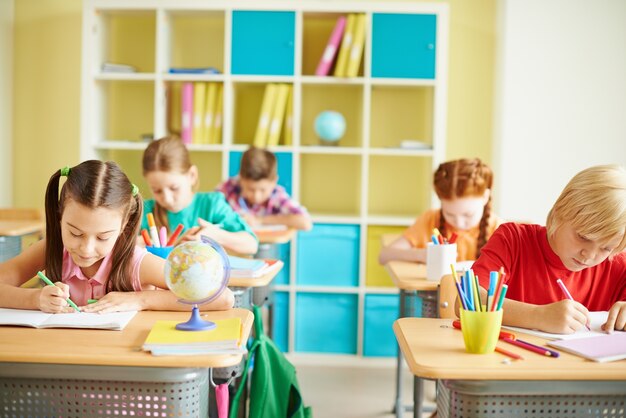
The habits children practice daily are the ones that quietly shape their futures. Choosing a task, following steps, noticing errors, correcting them, and finishing with care all build inner structure. Later, the same child can approach writing, science, or teamwork with the confidence that effort leads somewhere. When adults focus on routines that support independence and responsibility, they are supporting building future success without turning childhood into a checklist.
Guiding Without Taking Over
Supportive adults walk beside children rather than pulling them forward. Guidance can look like preparing the space, offering a short demonstration, and then stepping back to observe. It can also look like protecting time for deep engagement, so the child doesn’t have to switch tasks every few minutes. Many families ask for student growth tips, and one of the most effective is to offer help in small, specific ways enough to remove a barrier, but not so much that the child loses ownership of the work.
Conclusion
A child’s learning map keeps evolving because every answer creates the next question. When children are encouraged to notice details, test ideas, and talk through their thinking, their curiosity becomes a steady engine rather than a passing phase. Over time, the child learns an empowering truth: discoveries are not reserved for experts. They are available to anyone who keeps asking, keeps trying, and keeps paying attention to the world.